Copywriting Warriors
Multi Location SEO Reporting
Multi location SEO reporting is the process of measuring local search visibility, website engagement, Google Business Profile activity, and qualified customer actions across every business location in one consistent reporting framework. It gives marketing leaders a way to compare performance fairly, identify gaps by market, and prioritize work that can support stronger demand generation.
A useful report does more than combine rankings and traffic into a companywide total. It shows which locations are gaining or losing visibility, whether local profiles and landing pages are producing meaningful actions, and where operational issues may be limiting results. For franchise brands, regional operators, and enterprises with multiple branches, that level of detail supports better budget allocation, accountability, growth planning, and clearer conversations between corporate teams and local operators.
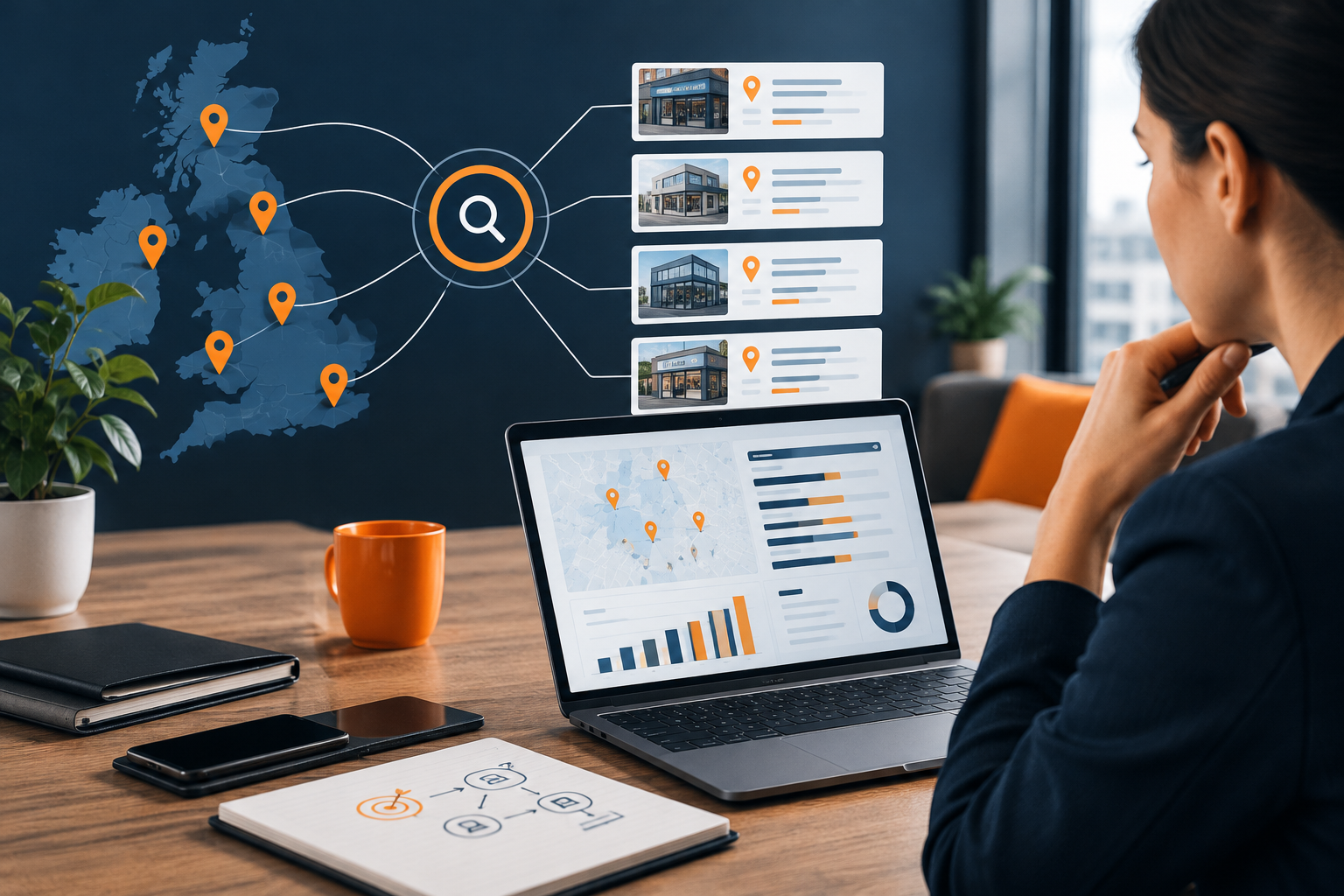
What Does Location-Level SEO Reporting Cover?
Multi location SEO reporting is a structured system for reviewing organic search and local search performance at both the location and brand level. It brings together data that would otherwise sit in separate platforms, helping leaders make decisions without losing sight of individual market conditions.
How Is Location Reporting Different From a Standard SEO Report?
A standard SEO report often focuses on total website traffic, rankings, and conversions. A multi-location report separates those results by branch, territory, service area, landing page, or franchise unit. That distinction matters because aggregate improvement can hide declining performance in important local markets.
Which Teams Use Location SEO Reports?
Corporate marketing teams use reports to manage brand-wide performance and investment. Local managers may use them to understand profile activity, location-page engagement, and lead opportunities in their markets. Franchise operators, sales leaders, and operations teams can also benefit when reports connect marketing activity to customer actions.
What Business Questions Should the Report Answer?
The report should answer which locations are visible for relevant local searches and which are falling behind. It should also clarify whether website visits, calls, direction requests, form submissions, and other actions are moving in a favorable direction. Most importantly, it should identify what the team should address next.
Why Does Location-Level Reporting Matter for Businesses?
Location-level reporting matters because local SEO performance rarely moves evenly across every market. Search competition, review activity, local demand, staffing, business hours, and location-page quality can all create meaningful differences between branches.
Why Can Companywide SEO Totals Be Misleading?
Companywide organic traffic can rise while several priority locations lose local visibility. A strong market may also offset weaker locations, making overall results appear healthier than they are. Separating performance by location prevents leaders from using blended totals as the only measure of progress.
How Can Location-Level Reporting Improve Marketing Decisions?
Location comparisons help teams direct resources toward the highest-priority gaps. For example, a location with low profile activity may need listing work, while another with strong traffic but weak lead conversion may need landing-page or intake improvements. Better segmentation supports decisions tied to CAC, sales capacity, margin, and local market potential.
Which Stakeholders Need Different Views of Performance?
Executives usually need a concise view of trends, risks, and business implications. Marketing teams need channel, page, query, and conversion detail to guide execution. Location managers need a practical scorecard that focuses on actions they can influence, such as profile accuracy, review response processes, and local promotion coordination.
Who Should Consider Centralized Local SEO Reporting?
Centralized reporting is appropriate for businesses that need to compare performance across more than one managed location. It becomes especially valuable when corporate teams oversee local marketing standards, shared websites, franchise programs, or geographically distributed sales operations.
Do Franchise Brands Need Location Reporting?
Franchise brands often need reporting that balances corporate visibility with local accountability. Franchisees may have different market conditions, budgets, and levels of participation, so a single national report is rarely enough. A shared framework can provide consistency while still giving individual operators relevant local detail.
When Do Enterprise and Regional Businesses Need Location Reporting?
Enterprise and regional businesses need location reporting when customers search for nearby services, store locations, or local professionals. Organizations with separate branch pages, local phone numbers, or location-specific offers also benefit from more granular measurement. The need increases when leadership must decide where to expand, defend market share, or improve underperforming territories.
Can Small Multi-Location Businesses Benefit From a Shared Dashboard?
Yes, smaller operators can benefit if their reporting remains focused on decisions rather than excessive data collection. A simple dashboard can compare profile actions, local landing-page traffic, leads, and visibility trends across branches. The goal is not enterprise-level complexity but a dependable way to spot meaningful differences.
What Problems Does Location SEO Reporting Solve?
Location SEO reporting solves the problem of fragmented performance data and unclear local priorities. It creates a common view of what each location is doing, where measurement is incomplete, and which issues require action from corporate marketing, local staff, or outside specialists.
How Does Reporting Reveal Underperforming Locations?
A location scorecard can show branches with declining impressions, weaker engagement, fewer customer actions, or lower conversion rates than comparable markets. Those signals do not automatically prove an SEO problem, but they identify where investigation is needed. Teams can then review competition, technical issues, profile completeness, reviews, content, and operational factors.
How Can Reporting Identify Tracking and Profile Management Gaps?
Reporting can expose missing analytics tags, inconsistent conversion definitions, broken forms, unclaimed profiles, or inaccurate location data. These issues can distort decision-making because a low number may reflect poor measurement rather than poor demand. A reliable reporting process should flag data quality concerns instead of presenting questionable numbers as facts.
Why Does a Common Reporting Framework Improve Accountability?
When each location is measured differently, performance conversations become subjective and difficult to manage. A common framework establishes consistent definitions, date ranges, and performance expectations. It also makes it easier to assign ownership for the next action, whether that action is technical, editorial, operational, or promotional.
What Should a Location SEO Report Include?
A useful location SEO report should include executive insights, location comparisons, search visibility trends, Google Business Profile activity, website engagement, and qualified conversion signals. The right mix depends on the business model, but every metric should help answer a decision-oriented question.
Which Search Visibility Metrics Belong in the Report?
Search visibility reporting can include clicks, impressions, click-through rate, average position, leading queries, and top-performing location pages. Google Search Console performance reporting supports analysis by date, query, page, country, and device. These metrics are most useful when segmented by location intent and reviewed alongside conversion activity.
Which Google Business Profile Metrics Should Be Tracked by Location?
Location reports may track profile views, searches, website clicks, calls, direction requests, and other available customer actions. Google Business Profile performance data can help businesses review activity across eligible profiles and compare location trends. Profile actions should be treated as engagement indicators, not as confirmed revenue without additional attribution.
How Should Website and Lead Data Be Connected to Local SEO Performance?
Location pages should be connected to meaningful lead events, such as calls, quote requests, appointment requests, or qualified form submissions. Google Analytics lead generation reports can help teams assess acquisition channels, landing pages, and lead-related activity. Where possible, lead data should be reviewed with CRM or sales outcomes to distinguish interest from qualified demand.
How Does Location SEO Reporting Work?
Location SEO reporting works by collecting approved data sources, standardizing location identifiers, separating performance by relevant market, and turning trends into prioritized recommendations. The process should be repeatable enough for recurring reviews but flexible enough to address changing business goals.
Which Data Sources Should Feed a Multi-Location Report?
Common sources include Google Business Profile, Google Search Console, Google Analytics, call tracking, form systems, CRM platforms, rank tracking tools, and review management platforms. Not every business needs every source at the beginning. The priority is to include data that improves decisions while maintaining consistent definitions and reliable access.
How Are Locations Segmented for Accurate Comparisons?
Each location should use a consistent identifier across reporting systems whenever possible. Segmentation may include physical branches, franchise territories, service areas, regions, business lines, or groups of comparable locations. Comparisons should account for legitimate differences, such as hours, services, launch dates, local competition, and seasonal demand.
How Often Should Teams Review Location SEO Data?
Monthly reporting is common for strategic review because many SEO changes need time to develop into a meaningful trend. Weekly monitoring may be appropriate for urgent technical problems, major campaigns, or profile disruptions. Quarterly reviews can help leadership assess budget allocation, market expansion priorities, and broader performance patterns.
How Should You Evaluate Location Reporting Options?
Businesses should evaluate reporting options based on data coverage, implementation effort, customization needs, governance requirements, and the level of strategic guidance required. The right choice depends on whether the internal team can turn reporting into action consistently.
Should You Build Reporting Internally or Use a Managed Service?
An internal dashboard may work well when the organization has clean data, reporting expertise, and enough capacity to investigate changes. A managed service may be more suitable when data is fragmented or the team needs analysis and recommendations in addition to dashboards. Businesses should evaluate how reporting fits into their broader local SEO program.
| Option | Best Fit | Implementation Effort | Strategic Guidance |
|---|---|---|---|
| Internal dashboard | Teams with analytics resources and established data governance | Higher internal setup and maintenance responsibility | Depends on internal expertise |
| Reporting platform | Organizations needing centralized data visualization and recurring access | Moderate setup, depending on integrations | Usually limited to platform features |
| Managed reporting service | Businesses needing analysis, recommendations, and accountability support | Shared setup effort with provider involvement | Typically includes strategic interpretation |
Which Capabilities Matter Most in a Reporting Platform?
Look for location-level filtering, dependable data connections, scheduled reporting, annotations, and clear permission controls. The platform should support comparison without forcing teams to manually rebuild reports every cycle. It should also make it easy to identify exceptions, such as locations with missing data or sharp changes in performance.
What Questions Should You Ask Before Choosing a Reporting Partner?
Ask which data sources the partner can access, how locations will be segmented, and how recommendations will be prioritized. Confirm who owns the dashboard, how reporting definitions are documented, and how data discrepancies are handled. Also ask whether the service provides business interpretation rather than a collection of charts without context.
How Much Does Location Reporting Cost and How Long Does It Take?
The cost and timing of a reporting program depend on the number of locations, the quality of existing tracking, required integrations, customization needs, and reporting cadence. Businesses should avoid treating any standard price or timeline as universally applicable because implementation conditions vary widely.
Which Factors Increase Reporting Costs Across Locations?
Costs can increase when data lives in multiple systems, location naming is inconsistent, conversion tracking needs repair, or custom CRM integration is required. A large number of locations may also require more governance, quality checks, and segmentation. Strategic analysis and recurring stakeholder meetings can add value but require additional ongoing effort.
What Affects Reporting Setup Time?
Setup time is influenced by account access, data cleanliness, tracking validation, platform configuration, and approval processes. Organizations with consistent location data and existing conversion tracking can usually move faster than those rebuilding measurement foundations. A phased rollout may be sensible when the business needs to validate the framework before expanding it.
When Does Custom Reporting Become Worth the Added Investment?
Custom reporting is worth considering when standard dashboards cannot answer material business questions. Examples include complex franchise structures, multiple service lines, offline conversion workflows, or location-specific revenue models. The decision should be evaluated against reporting scope, decision value, and the internal time saved, not dashboard appearance alone.
What Deliverables Should You Expect From Reporting?
Reporting deliverables should make performance understandable at the executive, marketing, and local-management levels. A good package typically combines recurring dashboards with written interpretation, location scorecards, documented definitions, and a prioritized action plan.
What Should an Executive Summary Include?
An executive summary should highlight material trends, major risks, notable location differences, and recommended decisions. It should explain what changed, why it may have changed, and what action is proposed. Senior leaders generally need concise visibility into demand, lead quality, investment efficiency, and unresolved measurement gaps.
What Should Location Managers Receive?
Location managers should receive a focused scorecard with metrics they can understand and influence. This may include profile accuracy, review trends, calls, website actions, local page engagement, and open action items. Reports should avoid overwhelming local teams with technical metrics that do not lead to a practical next step.
How Should Recommendations Be Prioritized After Each Reporting Cycle?
Recommendations should be ranked by expected business importance, urgency, effort, and dependency. Critical tracking failures and inaccurate business information usually require attention before lower-priority content refinements. Each recommendation should identify an owner, target completion date, and the reason it matters to local performance.
How Do You Measure Reporting Program Results?
The value of a reporting program should be measured by whether it improves decision quality, data completeness, action follow-through, and visibility into qualified local demand. Rankings and traffic can be useful indicators, but they should not be treated as the sole proof of success.
Which Metrics Show Local Search Visibility?
Useful visibility signals include impressions, clicks, click-through rate, query trends, local landing-page performance, and Google Business Profile discovery activity. Ranking data can provide directional insight when it is tracked consistently by market and intent. These indicators should be evaluated alongside competitor conditions, seasonality, and business changes.
How Should You Connect SEO Metrics to Leads and Customer Actions?
Use defined conversion events to connect local search activity with calls, forms, bookings, store visits where appropriately measured, and qualified sales opportunities. CRM stages can help determine whether leads become viable pipeline or closed business. This connection is necessary for evaluating payback and revenue impact without overstating what top-of-funnel metrics prove.
Why Should You Compare Trends Instead of Relying on One Reporting Period?
A single month can be affected by seasonality, promotions, tracking changes, news events, or local operational issues. Trend analysis makes it easier to distinguish temporary variation from persistent performance movement. Annotations are especially useful when a profile update, website release, tracking change, or market event may explain a result.
What Mistakes Should You Avoid With Location SEO Reporting?
The most common reporting mistakes occur when teams collect data without establishing context, consistency, or ownership. A report should clarify decisions and priorities, not create false confidence through volume, attractive charts, or vanity metrics.
Why Is Reporting Only on Rankings a Mistake?
Rankings do not show whether searchers clicked, contacted the business, or became qualified customers. They can also vary by location, device, personalization, and search conditions. Ranking trends are useful as one diagnostic input, but meaningful reporting includes engagement and conversion evidence.
What Happens When Location Data Is Blended Together?
Blended data can hide weak markets behind strong ones and create the wrong budget priorities. It can also make local managers feel unfairly evaluated when their results are compared without market context. Segmented reports provide a clearer view of where the business needs operational or marketing intervention.
How Can You Prevent Reports From Becoming Data Without Decisions?
Every recurring report should include observations, recommended actions, owners, and follow-up status. Teams should agree on which metrics indicate a problem worth investigating and which are merely informational. Review meetings should end with a short list of priorities rather than an unassigned collection of findings.
When Should You Hire Expert Help and What Should You Do Next?
Expert help is appropriate when location data is fragmented, measurement is unreliable, reporting is consuming too much internal time, or leaders cannot turn findings into a clear local SEO plan. Specialist support can provide structure, technical validation, and strategic interpretation across a complex location portfolio.
Which Signs Suggest Your Team Needs Outside Reporting Support?
Common signs include inconsistent dashboards, missing conversion tracking, unclear location ownership, and repeated debates about whose numbers are accurate. Support may also be valuable when expansion, franchise growth, or a website migration raises the stakes. A specialist can help establish a reporting model that supports both governance and practical execution.
What Should You Prepare Before Requesting a Local SEO Visibility Audit?
Prepare a current location list, service areas, website details, access information for key platforms, and a summary of business goals. Identify which conversions matter most and where lead quality is currently measured. This information helps an audit focus on actionable reporting gaps rather than generic observations.
How Can a Reporting Audit Set Priorities for Location SEO Work?
An audit can identify missing data, inconsistent location pages, profile issues, technical barriers, and opportunities to improve lead measurement. It can also separate urgent fixes from longer-term growth initiatives. The next step is to document the highest-priority reporting gaps, assign owners, and establish a review cadence that supports action.
Mini FAQ
Can One Dashboard Report on Every Business Location?
Yes, one dashboard can report on multiple locations when accounts, location identifiers, and tracking conventions are organized consistently. The dashboard should still allow users to filter by individual location, region, franchise group, or business unit.
How Often Should Location SEO Reports Be Updated?
Monthly updates are often suitable for strategic decision-making, while weekly checks may be useful for urgent issues or active campaigns. The right cadence depends on data availability, business pace, and the team’s ability to act on findings.
Can Google Business Profile Data Be Compared Across Locations?
Yes, profile performance can be compared across locations when businesses use consistent reporting periods and account for meaningful market differences. Calls, website clicks, direction requests, and views should be interpreted as customer actions, not direct revenue by default.
Should Franchisees Receive Their Own SEO Reports?
Franchisees usually benefit from a location-specific scorecard that shows relevant local performance and assigned actions. Corporate teams should maintain common definitions so franchise reports remain comparable across the network.
What Is the Best First Step for Improving Reporting Across Multiple Locations?
Start by auditing location data, conversion tracking, Google Business Profile access, and reporting definitions. Once the measurement foundation is reliable, the business can build a practical reporting cadence around the decisions leaders need to make.