Copywriting Warriors
SEO Title Tags: How to Write Clear Page Titles
An SEO title is the text placed in a page’s HTML <title> element. It helps describe the page for search engines and users and can influence the clickable title link shown in Google Search. Google may use the title element directly or select different wording from the page, headings, links, or other relevant signals when it believes another option better represents the result.
For a business, a well-written page title is not a shortcut to rankings or revenue. Its purpose is to make the page topic clear, help qualified searchers judge relevance, and create a consistent path from the search result to the landing page. Strong titles are specific, accurate, distinct from similar URLs, and supported by the content visitors find after clicking.
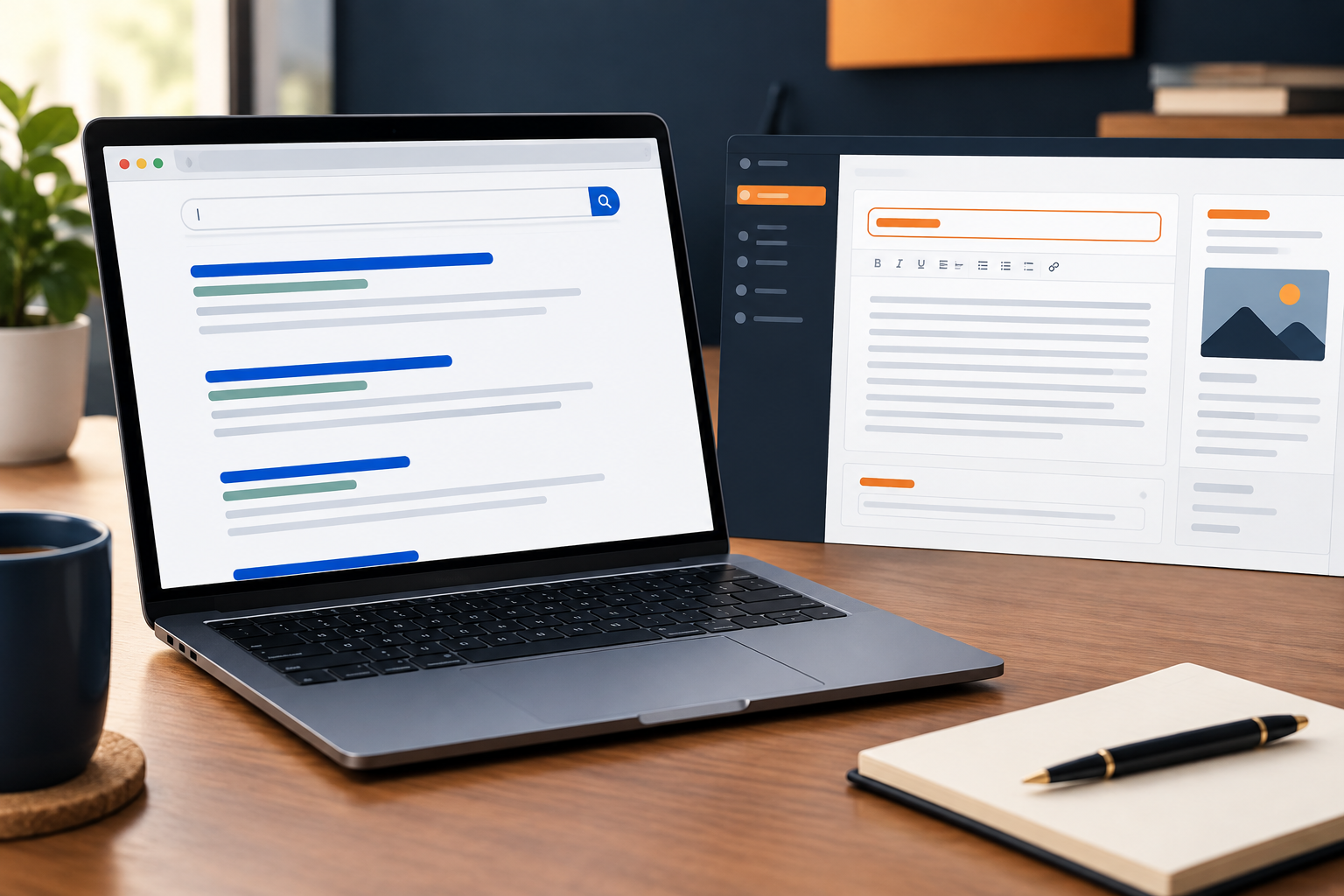
What is a page title?
A page title is usually the text in a page’s HTML title element, often called a title tag. It provides a concise description of the page and may appear in browser tabs, bookmarks, and search results.
How does a title tag differ from a Google title link?
“SEO title” and “title tag” commonly refer to the same HTML element. A title link is the clickable headline displayed in Google Search. Google can use the title element, visible headings, prominent page text, anchor text, and other signals to generate that headline.
How is a page title different from an H1?
The title element is part of the page code, while the H1 is the main visible heading on the page. Both should describe the same central topic, but they do not need to use identical wording. Alignment matters more than exact matching.
Why might Google show different wording?
Google may adjust a title link when the submitted title is vague, repetitive, overly long, keyword-stuffed, or poorly aligned with visible content. It may also choose wording that better reflects a particular query or the page’s position within the site.
Does a rewritten title link indicate a penalty?
No. A different title link does not automatically mean the page has been penalized or is performing poorly. It means Google selected wording it considers useful for that result.
What should be reviewed when displayed titles vary?
Review the title element, H1, opening copy, internal anchor text, and page purpose. When those elements consistently describe the same topic, Google has clearer source material to use.
Which pages need a title strategy?
Any organization that relies on organic search can benefit from a deliberate page-title process. The need grows as a site adds service pages, product categories, locations, articles, or similar templates.
Which pages should receive attention first?
Start with high-value service pages, product categories, priority locations, comparison pages, and lead-generating resources. Also review pages with duplicate, outdated, generic, or misleading titles.
When is a title template appropriate?
Templates can work for genuinely similar page groups, such as product variations or office locations. The variable portion must still identify the specific page clearly, rather than producing titles that differ by only a minor word.
What should a title tag include?
A useful title leads with the page’s real topic and adds only the details needed to distinguish it from similar results. Depending on the page, that may include a service, product type, audience, location, format, or restrained brand reference.
Where should the main topic appear?
Place the clearest description of the page near the beginning where practical. This helps searchers quickly understand the result and reduces the temptation to repeat the same phrase unnecessarily.
When should a brand name be used?
A brand name can help when recognition, trust, or navigation matters to the searcher. It is often placed after the page topic so the unique subject remains prominent.
How should titles differ by page type?
The right structure depends on the page’s purpose and the information a searcher needs before clicking. Modifiers should communicate a real distinction, not merely add more keywords.
What works for service and location pages?
A service page can identify the service and a meaningful qualifier, such as audience or application. A location page can include the service and location when the business genuinely serves that area and the page contains useful local information.
What works for guides and category pages?
A guide can use a clear topic, question, or format that reflects the information provided. A category page should identify the relevant product or service group and a genuine differentiating detail where needed.
What should be understood before writing titles?
Before drafting titles, establish the page’s purpose, intended audience, canonical URL, visible content, and relationship to nearby pages. A title cannot resolve confusion created by overlapping or poorly defined pages.
How do you identify a page’s main purpose?
Ask what the page is designed to help a visitor understand or do. Review the URL, H1, opening copy, calls to action, and internal links. If those elements point in different directions, the page may need positioning work before its title is revised.
Why must the title match the landing page?
A matching title sets accurate expectations. A result that promises a comprehensive guide but leads to a short sales pitch can weaken trust. The same issue occurs when a local title leads to a generic page with no local relevance.
How do similar pages create overlap?
Title overlap occurs when several URLs target nearly the same topic with nearly identical wording. Search engines and users may then struggle to determine which page is the best fit.
What causes title duplication?
Duplication often comes from generic templates, copied page structures, unclear content planning, or attempts to target the same topic through service, blog, industry, and location pages without meaningful differentiation.
How should overlapping pages be handled?
Map each page to a distinct searcher need. If two pages serve the same purpose, consolidation, canonical review, or clearer content separation may be more useful than minor title edits.
How can titles support qualified visibility?
Descriptive titles help searchers identify relevant results and understand what to expect after clicking. They can support qualified visibility and enquiries indirectly, but they cannot guarantee rankings, clicks, leads, or sales.
How do titles help searchers choose a result?
Searchers often compare results for an exact service, product, location, answer, or level of detail. A clear title makes that comparison easier and can distinguish a commercial offer from a broad educational resource.
How can a service-page title set expectations?
A service-page title should identify the service and, where useful, the buyer, market, delivery model, or location. It should not imply outcomes, capabilities, certifications, or availability that the page cannot substantiate.
What information should guide title decisions?
Title decisions should be informed by the page itself, available search data, sitewide patterns, and a realistic view of competing results. Evidence should improve judgment, not encourage imitation or unsupported promises.
What can Google Search Console reveal?
Google Search Console can show queries, impressions, clicks, and average positions associated with a page over a selected period. This may reveal relevant language searchers use and whether the page is appearing for topics that match its intended purpose.
What should be checked on the page first?
Review the canonical URL, indexability, H1, opening content, subheadings, internal links, and primary call to action. Also confirm whether the title is controlled at page level or inherited from a template.
Which title mistakes should be avoided?
Common mistakes reduce clarity, create duplication, or promise more than the page can deliver. Avoiding these errors is generally more useful than pursuing a supposedly perfect character count.
Why is keyword stuffing unhelpful?
Keyword stuffing turns a title into a list of repeated terms rather than a useful description. It can make the result harder to read, create an unprofessional first impression, and give Google reason to display different wording.
What makes a title vague or repetitive?
Labels such as “Home,” “Services,” or “Solutions” reveal little when used alone. Long slogans and repeated brand language can also hide the unique page topic. Replace generic labels with a clear description of what the page actually covers.
How do titles connect to wider SEO work?
Page titles work best within a connected process that includes intent research, site architecture, page copy, internal linking, technical implementation, and conversion design. Treating them as isolated metadata limits the quality of the decision.
How should titles align with page copy?
The title should summarize the page’s central promise, while the copy should deliver on that promise quickly and clearly. Informational pages should provide useful answers, while commercial pages should explain the decision well enough for a qualified buyer.
How can internal links reinforce page topics?
Internal links help users and search engines navigate related content. Clear anchor text and sensible content groupings can reinforce which page addresses which topic without forcing repetitive exact-match links.
What does a practical title review involve?
A productive review begins with a manageable group of important pages rather than a rushed rewrite of every title on the site. This makes quality control, implementation, and later evaluation more practical.
What belongs in a title inventory?
List each priority URL with its current title, H1, page purpose, intended audience, canonical status, and owner. Note nearby pages that may overlap in topic.
What should be checked before publication?
Confirm that the revised title accurately describes the page, differs from related URLs, and aligns with the H1, opening copy, internal links, and call to action. Verify that the CMS publishes the intended title element.
How should title updates be evaluated?
Evaluate updates by checking indexing, how Google presents the page over time, and whether relevant search visibility and visitor behavior change within a meaningful context. Interpretation should remain cautious because multiple factors can change at once.
How long does recrawling take?
Recrawling timing varies by site, page importance, crawl patterns, and technical accessibility. There is no universal timeframe that guarantees when a revised title will appear in search results.
Which metrics are useful?
Useful measures may include indexed status, impressions, clicks, click-through rate, query mix, and the title link displayed for representative searches. Downstream measures can also matter when they are measured reliably and match the page’s commercial role.
What should leaders ask before approving title work?
Business leaders should expect a page-level process that connects title recommendations to intent, content quality, implementation, and measurement. The right questions reveal whether the work is strategic or merely template-driven.
How will intent and overlap be assessed?
Ask whether recommendations consider audience, commercial purpose, visible content, search queries, and competing result types. Also ask how duplicate and near-duplicate titles will be identified across the site.
Who will implement and verify changes?
Clarify who will add approved titles, verify the published HTML, and record the deployment date. This helps prevent a gap between recommended copy and the live website.
What should happen after the review?
After the review, prioritize changes that improve clarity on important pages, publish them carefully, and monitor affected URLs without assuming every issue is metadata-related. Use findings to identify where content, structure, technical SEO, or conversion work needs deeper attention.
Which changes should be prioritized?
Prioritize inaccurate titles, obvious duplicates, and important commercial pages where the landing page can meet visitor expectations. Address lower-value archives later unless they create a wider template or technical issue.
When is a broader review needed?
A wider review is appropriate when the page has unclear intent, thin content, duplicate topics, indexing issues, or a weak conversion path. A title change cannot compensate for a page that does not meet the searcher’s need.
Mini FAQ
What is the ideal length for an SEO title?
There is no fixed character count that guarantees Google will display a title exactly as written or rank it better. Keep the title concise enough to communicate the page topic clearly and remove words that add no useful distinction.
Can a title tag and H1 be the same?
Yes. They can be identical when one clear phrase serves both the search result and the page heading well. They can also differ slightly if they describe the same topic and make the same basic promise.
Does every page need a unique title?
Most indexable pages should have a distinct title that accurately reflects their unique content or purpose. Duplicate, filtered, or intentionally excluded pages may require a different technical approach instead.
Can Google rewrite my page title?
Yes. Google may show a different title link based on page content, headings, links, the query, or other signals. A clear, accurate title element that aligns with visible content gives Google stronger source material.
Should local service pages include a location?
Include a location when the page genuinely serves that area and provides relevant local information. Do not add location names solely to create pages with no distinct local value.